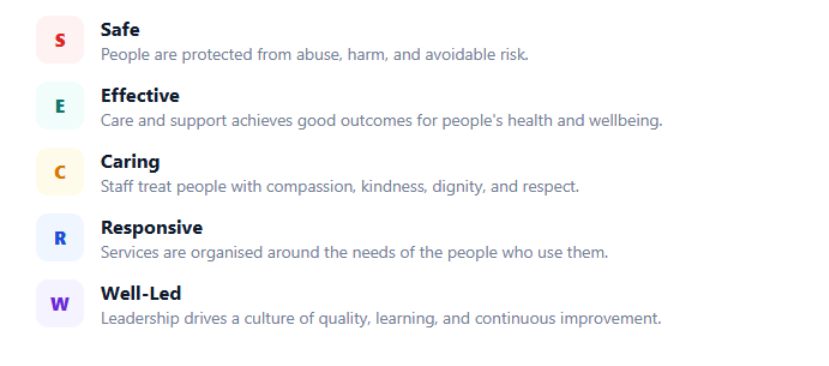
While the five questions are unchanged, the new framework brings sharper definitions of what good looks like under each one. Here is a summary of what inspectors will be looking for and what your service needs to be able to demonstrate.
1. Safe: People Are Protected From Harm and Abuse
Safety assessment under the new framework will focus on whether your service has a genuine safety culture, not just compliant documentation. Inspectors will look for evidence that risks are identified, managed, and learned from and that your staff understand their roles in keeping people safe.
Key evidence areas: incident reporting and learning, safeguarding responses, medicines management, and how your service manages risks for individuals with complex needs.
2. Effective: Care, Treatment and Support Achieves Good Outcomes
Effectiveness is assessed through the lens of whether care actually works for the people receiving it. Mental Capacity Act compliance, best-interest decision-making, and the outcomes your service achieves for residents or clients are all under the spotlight.
Key evidence areas: care planning and review quality, MCA documentation and practice, staff training and competency, and measurable outcomes for people using the service.
3. Caring: Staff Involve and Treat People With Compassion and Respect
Dignity and respect are assessed through direct observation as much as through documentation. CQC inspectors will be looking for evidence in the lived experience of the people your service supports, not just in your policies.
Key evidence areas: dignity and respect in daily practice, person-centred care delivery, involvement of people in their own care decisions, and the culture your staff create on the floor.
4. Responsive: Services Are Organised to Meet People's Needs
Responsiveness assesses whether your service adapts to the changing needs of individuals, including how promptly and effectively you respond when needs change.
Key evidence areas: complaint handling, care plan responsiveness to changing needs, how your service adapts for people with complex or changing conditions, and accessibility for people with different communication needs.
5. Well-Led: Leadership Drives a Culture of Quality, Learning and Improvement
The Well-Led key question carries significant weight in the new framework. Governance, oversight, and evidence of a genuine learning culture are not optional extras, they are central to how your leadership is assessed.
Key evidence areas: governance systems and oversight, quality assurance processes, how leadership identifies and responds to concerns, staff culture, and the use of data and learning to drive improvement.